Insight
Building a Culture of Reliability: Technology, Training and Transformation
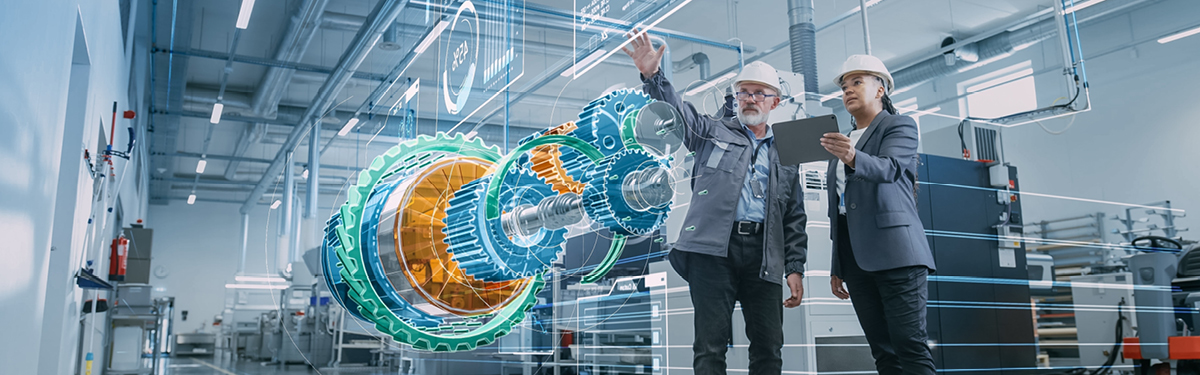
Industrial landscapes are evolving rapidly with core improvements in efficiency and reliability. Today’s operational teams are reconfiguring asset management with a view of creating factories of the future—meaning safer, faster, and increasingly digital.
Such transformation also means creating a culture of reliability is more crucial than ever for organizations seeking to optimize their operations and maintain a competitive edge.
With more than 40 years of expertise in asset management, Terrence O'Hanlon, CEO of Reliabilityweb, believes industrial organizations must integrate advancing technologies like AI with fundamental maintenance practices while balancing risk and opportunity.
What’s an effective asset management program? O'Hanlon shares practical wisdom and his vision for the future of reliability leadership in our Risk Matters X.0 podcast. Below are key takeaways from the episode, “Building a Culture of Reliability: Technology, Training and Transformation.”
“Asset management is a coordinated set of activities to realize value from the assets," says O'Hanlon. "The challenge is how do you coordinate decisions across the specification phase, the design phase, the build and purchase phase, the commissioning phase, the operate phase, the maintain phase and the improve phase?”
On Balancing Technology with Fundamentals
In an age where digital transformation dominates the conversation, organizations must not lose sight of reliability fundamentals — our tried-and-true maintenance practices — while embracing technological innovation.
The Data Quality Challenge
One of the most significant obstacles facing organizations today is ensuring data quality in asset management systems. O'Hanlon points out that even the most advanced AI tools and predictive analytics platforms can only deliver value when fed with accurate, consistent data, a challenge many maintenance teams will seek to resolve as teams continue to implement digital solutions to streamline operations.
“It takes a lot of work to do data governance correctly, and you can't leverage these technologies without the proper data underpinning…[Reliabilityweb’s] research shows that the overall trust in asset data is 60%. Get your data house in order,” says O'Hanlon.
AI in Industrial Operations: Expanding What’s Possible
Advances in generative AI and the internet of things is reshaping how organizations approach maintenance and reliability, especially as industry veterans retire from the workforce. O'Hanlon shares practical insights on how companies can effectively implement AI solutions to enhance their reliability programs beyond the hype without overlooking potential pitfalls.
“AI is not the answer to everything, but it has amazing features to capture knowledge," says O'Hanlon. "We're seeing Gen AI as sort of the knowledge base, being able to have a human conversation with your data in context.”
Risk vs. Opportunity in Asset Management
Creating effective asset management programs requires a delicate balance between mitigating risks and capitalizing on opportunities. The conversation explores how organizations can strike this balance while developing comprehensive reliability strategies.
“Where does risk fit in the business? Think about it like a knob. That's where we say culture plays a role. You can turn the risk to medium risk, you can turn it down to low risk, and you can turn it up to high risk…find what’s right for your business," says O'Hanlon. "Risk on the positive side is called opportunity, and we have a lot of opportunity to gain with asset management, with reliability approaches, and with better maintenance management.”
“Reliability is how you do business," says O'Hanlon. "You may have projects within reliability to help advance the performance of things, but you really need to have it as the way you think, the way you do business.”
Reliability Leadership
Perhaps most valuably, O'Hanlon shares his vision for the future of reliability leadership. He outlines how the role continues to evolve, requiring not just technical expertise but also strong communication skills, strategic thinking, and the ability to drive cultural transformation within organizations.
“Reliability is how you do business," says O'Hanlon. "You may have projects within reliability to help advance the performance of things, but you really need to have it as the way you think, the way you do business.”
In Pursuit of Maintenance Excellence
Whether you're a maintenance professional, reliability engineer, or asset manager, O'Hanlon's insights provide a roadmap for building and sustaining a culture of reliability excellence.
Meanwhile, asset reliability teams must find solutions that address two critical, near-term drivers that concern every industry: higher reliability and lower maintenance costs for key assets — all while keeping uptime all the time.
ABS Group’s reliability professionals recognize that people are the force behind these drivers, from operations and maintenance to quality and finance teams. Understanding that one size doesn't fit all when addressing reliability across organizations and industries, the team is tailoring custom solutions at different stages of reliability maturity.
Comprehensive asset reliability management services to consider include:
- Asset Criticality Ranking (ACR): A risk-based approach to optimizing asset performance management strategies
- EAM Master Planning: Using the DMAIC approach to assist maintenance organizations
- Failure Mode Effects Analysis (FMEA): Structured methods to identify asset functions, failures, and proper actions
- Reliability Based Maintenance (RBM): Six-step process to optimize maintenance programs
- Predictive Maintenance Programs: Solutions to improve equipment availability and reduce costs by 15-20%
- Root Cause Analysis (RCA): Complete training solutions for investigation needs
- Work Management Processes: Tailored improvement plans based on best-in-class practices
Discover How You Can Improve Reliability
By fostering a culture of collaboration and maintenance excellence from the top down, organizations will implement reliability improvements that lead to better performance and reduced costs across their operations.
>> Listen to the full episode of Risk Matters X.0